
Work ideas

The Gurdjieff approach
It is almost certainly a misnomer to speak of the Gurdjieff Work as a “system”— especially as that implies that it exists as a course of action to be taken with a prescribed beginning, middle, and end. And, although reading can be an important starting point, reading alone is not a substitute for “work on oneself.”
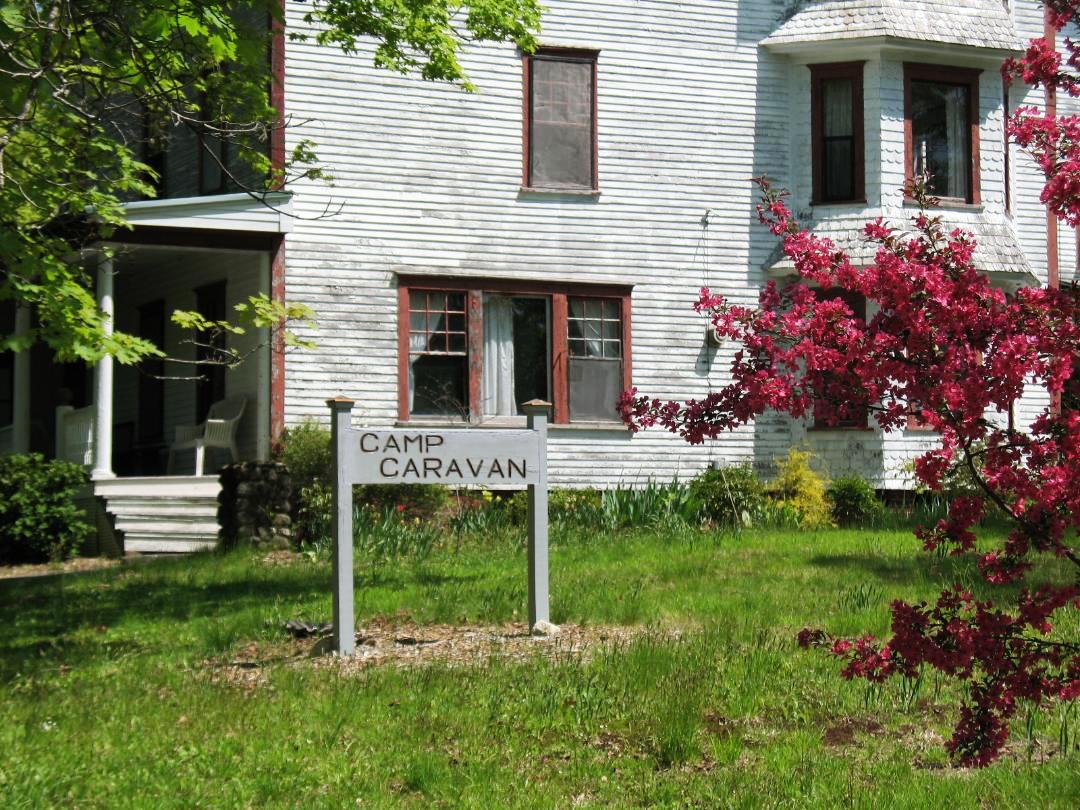 People at Camp Caravan approach the Work as a collection of starting points. All appear different, but all are necessary. Each person arranges their own work to include them all, as far as possible, and as far as the ideas are verified personally.
Bringing questions

Questions are like seeds, planted in the soil of our attention. They can open into moments of presence. These are not puzzles to be solved, but can be companions for the day. They are invitations to look again, to feel more deeply, to remember ourselves in the midst of life.
What in me is awake right now?
Beneath our habits and thoughts, something subtle is always here. Can it be felt—without trying to change it?
Where is my attention in this moment?
The simple act of noticing our attention is already a step toward freedom from mechanical living.
What do I serve when no one is watching?
Our quietest choices often reveal our true aim.
Am I listening to life—or only to myself?
Each moment offers a conversation between the world and my inner life. Which voice am I hearing?
What stands between me and simple seeing?
Often it is not the world that clouds our vision, but our own patterns and identifications.
How do I meet what I did not expect?
Unexpected moments test whether my presence is real or just an idea.
Is my inner state fit for the moment at hand?
Work begins when I remember that my inner condition affects all that I touch.
What is being asked of me—right now?
Not from imagination or habit, but from a finer sensing of the present.
Where is my body in this moment?
Sometimes the shortest path to presence is through the living sensation of the body.
Who am I? What is the purpose of my existence, of everyone’s?
Go beyond the cliché. Indeed, who am I and why are we here-really?
How can my life become more meaningful?
Dissatisfaction with the flatness of experience without presence can be the beginning of a personal search.
What would it take to exist in a deeper reality?
Although we do not work for “results” it is possible to taste this
What is my question today?
A real question—one that cannot be answered too quickly—can keep the Work alive.
Work values
In his book Beelzebub’s Tales to His Grandson, through the voice of Ashiata Shiemash, one of the characters, Gurdjieff describes “Obligolnian Strivings.”
To have in one’s ordinary being-existence everything satisfying and really necessary for the planetary body.
To have a constant and unflagging instinctive need to perfect oneself in the sense of Being.
The conscious striving to know more and more about the laws of world creation and world maintenance.
The striving, from the beginning of one’s existence, to pay as quickly as possible for one’s arising and individuality, in order afterward to be free to lighten as much as possible the sorrow of our Common Father.
The striving always to assist the most rapid perfecting of other beings, both those similar to oneself and those of other forms, up to the degree of ‘Marfotai,’ that is, up to the degree of self-individuality.
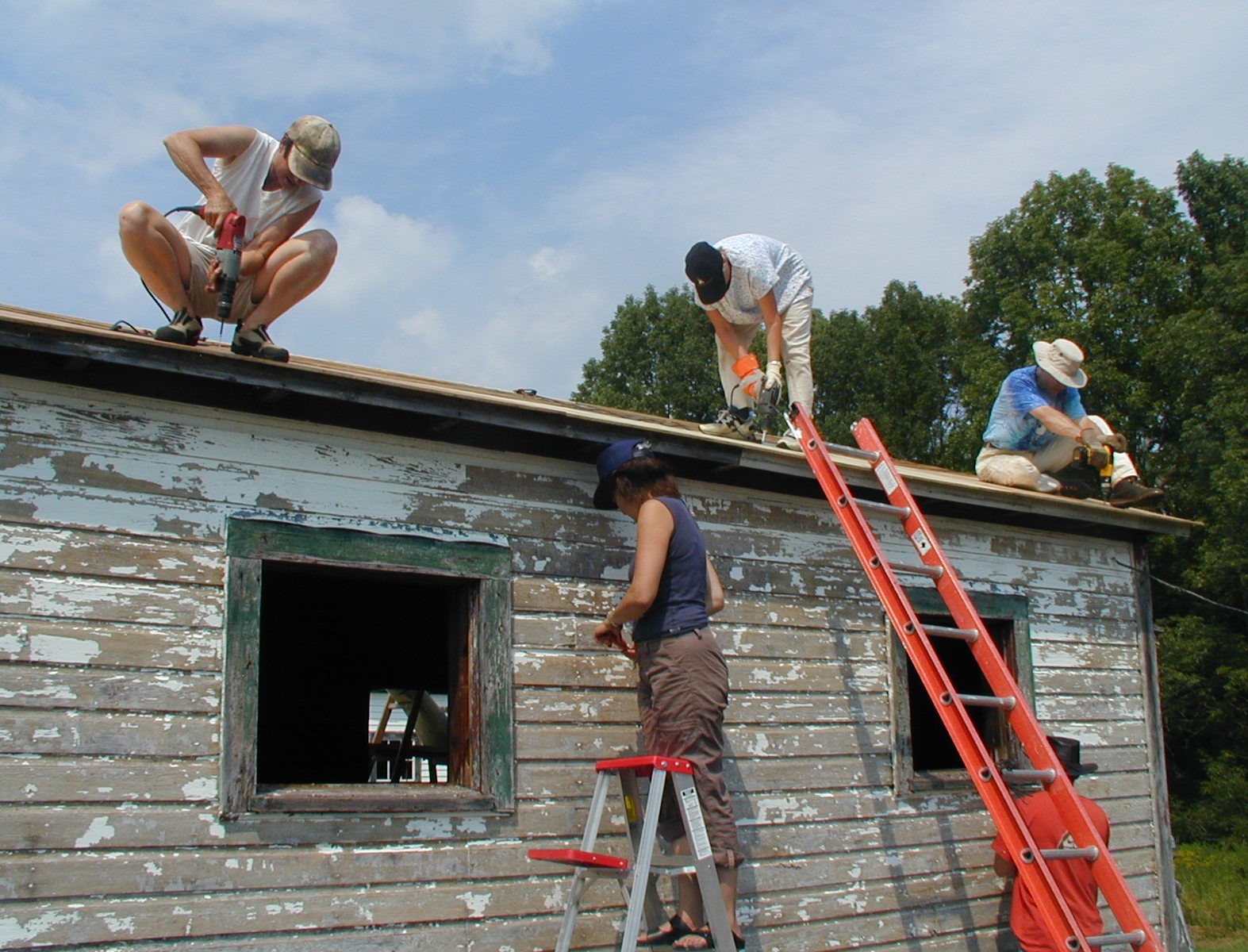
Fourth Way Work starting points
We explore multiple starting points, as individuals and also in the context of the group. Some of these are described with the following terms:
Attention, awareness, being, breath, cosmology, effort, enneagram, group work, Gurdjieff Movements, impartial self-observation, inner and outer senses, inner exercises, listening, meditation, practical work, presence, psychologic ideas, energies, essence and personality, imagination, judging, negative emotions, noticing, octaves and triads, other people, relaxation, sensation, self-remembering, sharing observations, waking up, and wholeness.
(Ecology) Reciprocal maintenance–J.G. Bennett’s description
“Among the many ‘crumbs from the idea table’ of Gurdjieff that have nourished my thinking, I count as of first importance the doctrine of Reciprocal Maintenance according to which every recognizable entity on every scale of existence participates in the universal exchange of energies—supporting and being supported by the existence of others.
Gurdjieff’s picture of the cosmos is that it cannot maintain itself, by itself. It needs to be fed from outside. It is no different for us. As we are, we cannot transform ourselves into the human beings that we are meant to be by our own efforts alone. At the same time, transformation cannot be accomplished without those efforts.
We all depend on food from a source higher than our own. At the same time, our efforts are also needed to provide food for that which is higher than ourselves.”— J.G. Bennett, The Dramatic Universe