
Our teachers
We are grateful to our teachers who generously shared their time, wisdom, and compassionate guidance. These are just a few of those whose memory we honor. Elizabeth Bennett, Mrs. Stavely, George and Mary Cornelius, and Vivien Elliott also provided remarkable guidance and support. We invite you to submit your remembrances here.
George Ivanovich Gurdjieff
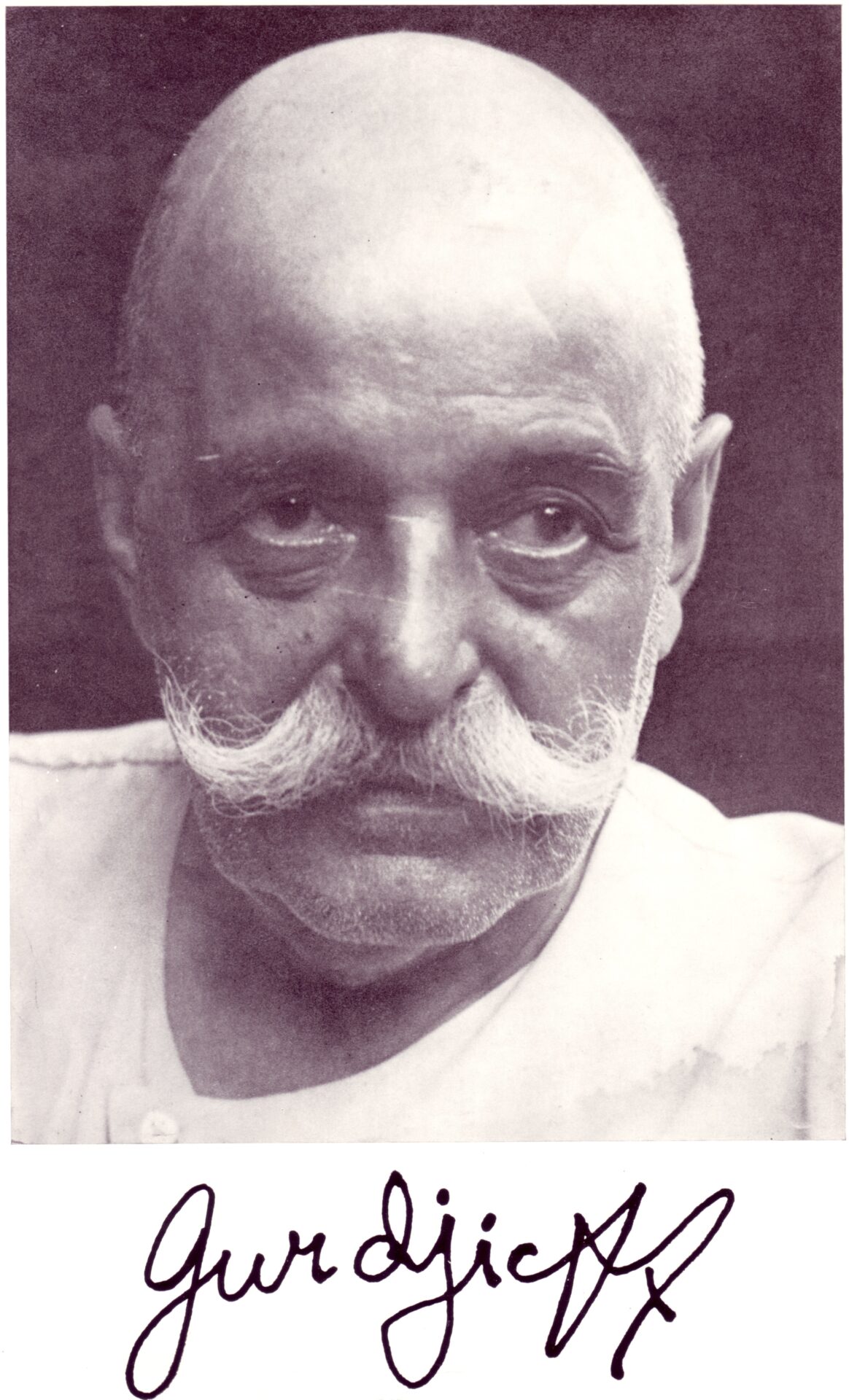
Born in the late 1800s, G. I. Gurdjieff was from Alexandropol, Armenia at the Russian/Turkish frontier, in the late 1800s. He began a spiritual search at a young age, connecting him to teachers throughout Asia. Gurdjieff brought his teachings to the West in the early 1900s, sharing his methods with people from all walks of life. He provided a remarkable set of ideas, practical psychological methods, and inner practices to help those with an aim for spiritual transformation and service.
Of particular interest to him was the challenge of how to share the wisdom of the East with Westerners, and he began a number of schools, including the Institute for the Harmonious Development of Man at the Prieuré at Fontainebleau near Paris, France.
In addition, an important part of his methodology included work with ancient sacred dance, (Gurdjieff Movements) accompanied by music. Scores for this music were produced by a collaboration between Gurdjieff who provided the melodies he collected at remote temples, and Thomas de Hartmann, who would improvise on these melodies.
His teachings come to us today through direct transmission from his many students. For the Millers River Educational Cooperative, these students became our teachers, especially J. G. Bennett, Irmis Popoff, Pierre Elliot, George Cornelius, and Mrs. Stavely. Gurdjieff also shared his ideas through publications including his three series:
Beelzebub’s Tales to His Grandson: An Objectively Impartial Criticism of the Life of Man
Meetings with Remarkable Men
Life is Real Only Then When, ”I Am”
———————————————————————————————————
John Godolphin Bennett

Read the complete article here.
A student of G. I. Gurdjieff, John Bennett began to teach the Work in 1930, but did not consider himself a teacher until he inaugurated his own school named “The International Academy for Continuous Education”, at Sherborne House, Gloucestershire, England, in October, 1971. From then until his death in December 1974, Bennett worked full-time with an annual intake of 90 – 100 students.
Many of those in the Camp Caravan community attended a course at Sherborne. The school was strictly experimental in curriculum, and Mr. Bennett taught what he had learned from his own various teachers and also from his own researches and observations. For a selection from his extensive publication list, view here.
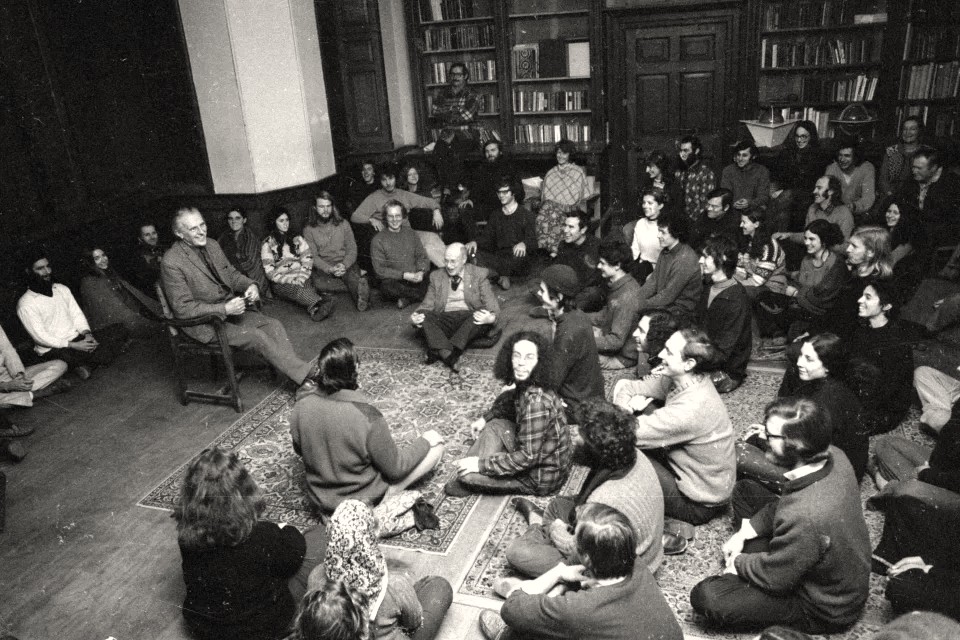
Prospectus introduction from the first Sherborne course
“This prospectus is addressed to those who care about the future—their own and that of mankind—especially those who have already searched and experimented with politics, social service, those who have looked for new experience in travel, in sex, or in drugs, for those who have tried religion or plunged into one of the many ’isms’ and movements that promise a new world, and have found them all lacking in an essential ingredient: that is, practicality. On every hand there are people to tell us what we ought to do, but few indeed have any idea how to do it. the basic course of the International Academy for Continuous Education is designed primarily for the purpose of teaching men and women of all ages how to live their lives in the way they themselves wish. It is particularly directed to those who are acutely aware of an unrealized self, of energies squandered, and of time wasted—who are prepared to go through hard training in order to change. It is, above all, for those who have realized that the first step in helping the world is to help oneself, that ‘inner change must come before outer change.’”
Continue here.
———————————————————-
Pierre Elliot
by Hugh Elliot
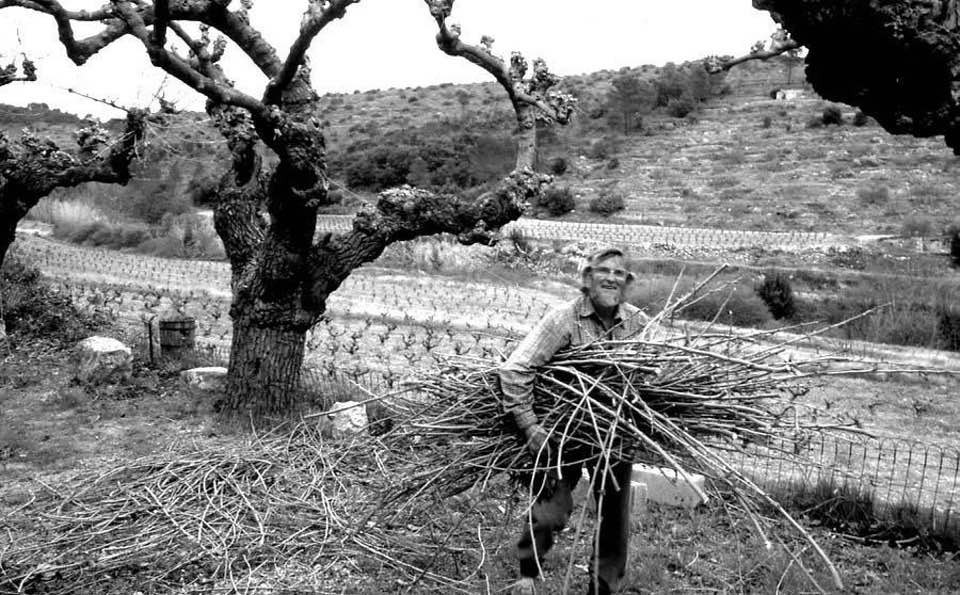
Read the complete article here.
View a Youtube video, “Higher Worlds”
Pierre Anthony Hugh Elliot was born on November 26, 1914, in London, England. He was raised by his mother who was widowed as a result of the great influenza epidemic that swept across Europe at the end of the First World War. Pierre grew up mostly in Paris, where his mother lived and worked as an opera singer.
Pierre recalled sheltering in the basement in 1918, at the age of four, with his mother. The German Imperial Army was raining artillery down on Paris, in a last- gasp effort before the Armistice was signed.
Work connection
Pierre’s aunt, his mother’s sister Winifred Beaumont, introduced him to the Work and ideas of G.I. Gurdjieff and P.D. Ouspensky. She was married to the scientist and philosopher, J.G. Bennett. Pierre was a frequent guest of the Ouspenskys in the 1930s.
Continue here.
————————————————————————————–
Irmis Barret Popoff
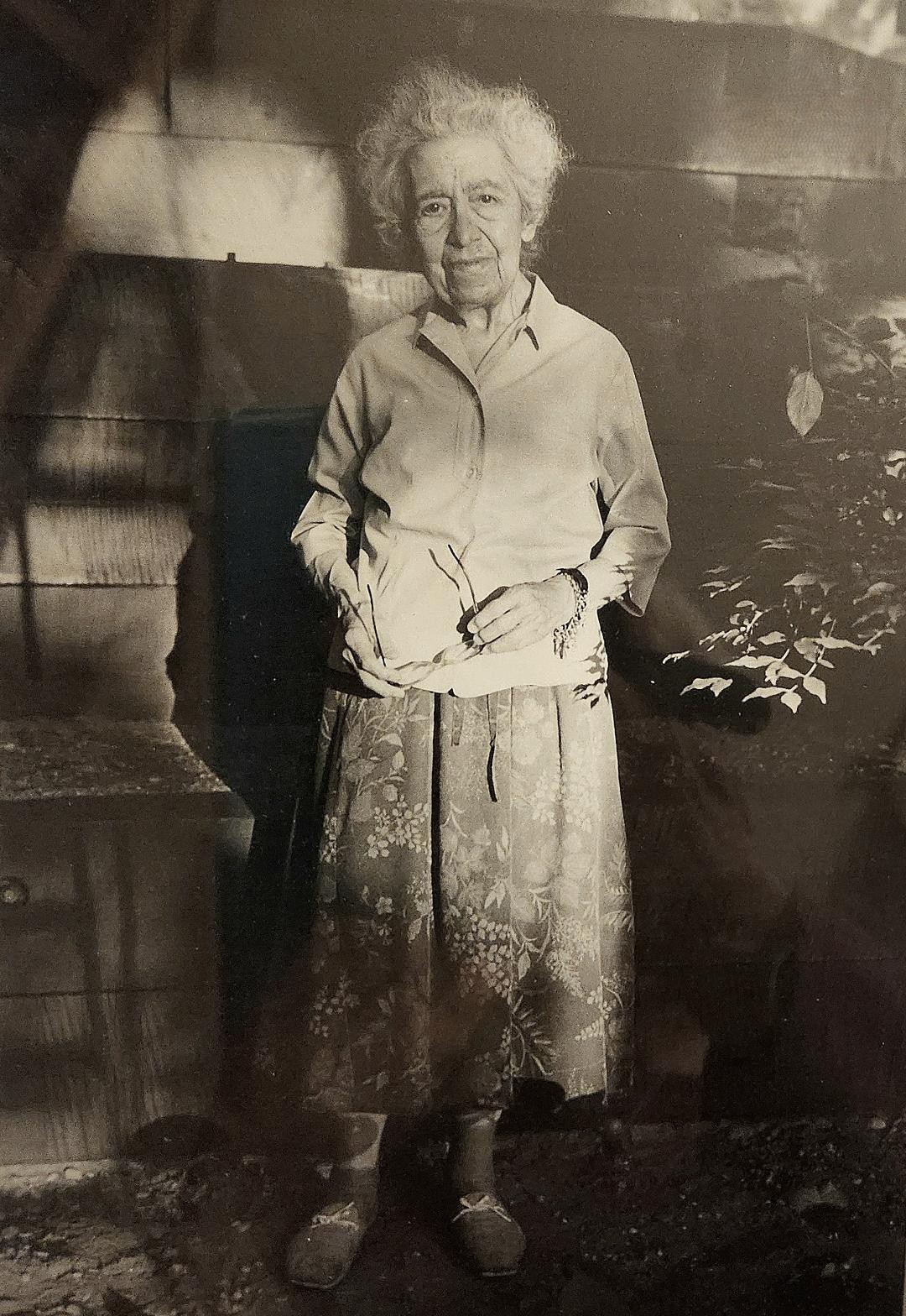 Excerpts from an article by Juanita Ratner published in The Gurdjieff International Review, used by permission, edited for publication.
Read the complete article here.
Early days
Irmis Barret Popoff (Mrs. P.) was born Irmis Barret de Nazaris, on October 22, 1900. Her father, a Venezuelan diplomat, gave her an aristocratic upbringing. General Barret had to flee Venezuela because of a political coup, eventually moving his family to the United States.
Fluent in Spanish and French, Mrs. P. worked in the translation department at the Morgan Guarantee Bank for 35 years. She came into contact with a group of Russian emigres, married Victor Popoff and had one son, Frank. The marriage dissolved early on.
Searching for knowledge
Mrs. P. searched for esoteric and spiritual knowledge through such avenues as Theosophy before meeting Ouspensky via a public lecture. She worked with him from 1941 to 1947. After his death, she worked with Gurdjieff, whom Madame Ouspensky summoned to take care of “his people.” Mrs. P. also spent time at Mendham with Madame Ouspensky and met at the Foundation with Mr. Nyland, serving for some time as his secretary. She also served as secretary to Mr. Ouspensky and created notes, approved by him, that she would sometimes share during Work periods.
Continue here.