
Music is an essential part of the work at Camp Caravan. We often play and listen to music when we gather. We encourage seminar attendees to bring their musical instruments. There are also opportunities to share sound and explore breathing through work with vocal production and shared listening.
Music for inner work
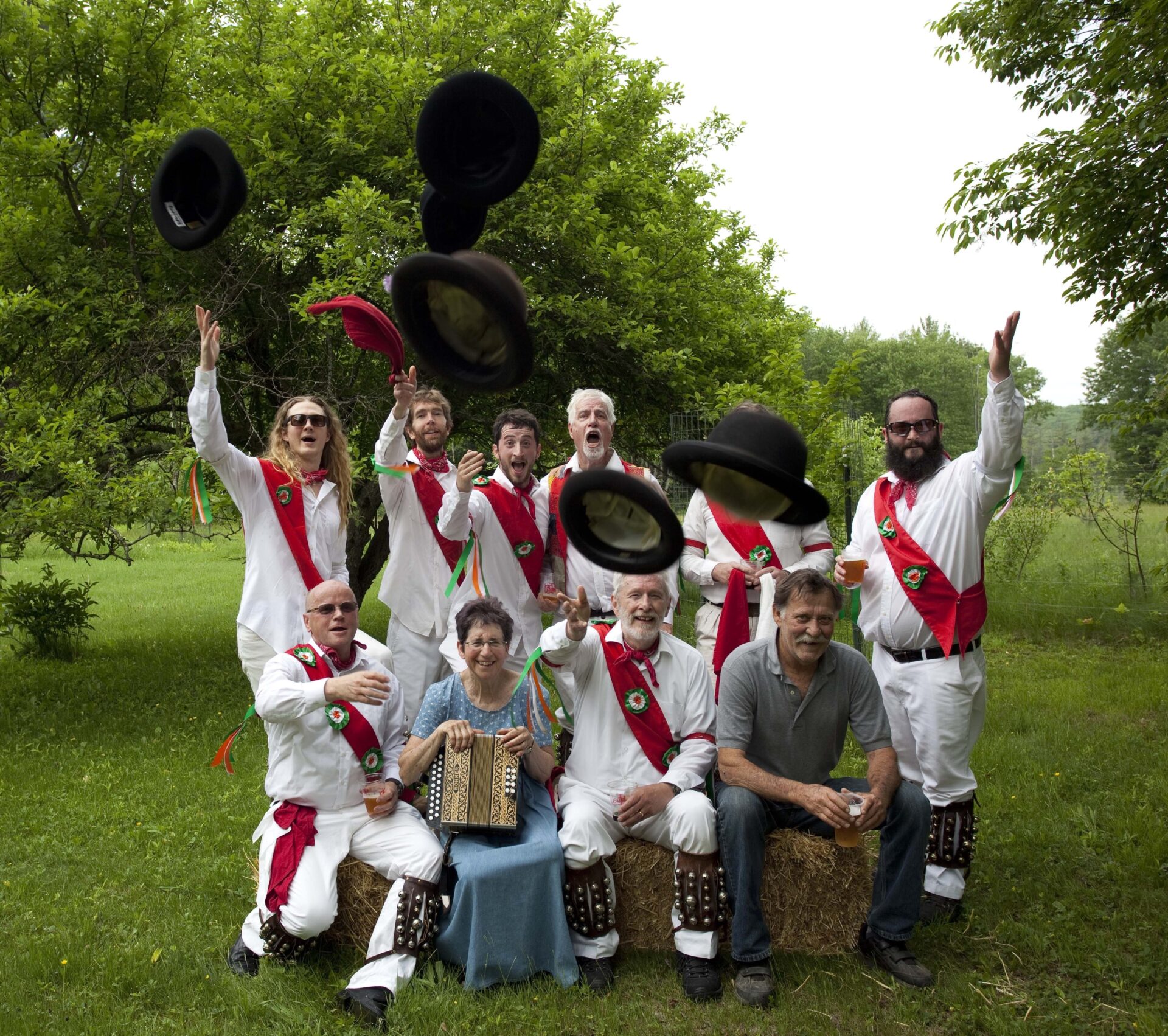 The Gurdjieff–de Hartmann music wasn’t written for concert life or as artistic self-expression in the usual sense. Instead, the goal is to support states of attention, presence, and inner receptivity. Gurdjieff linked certain pieces with exercises in concentration or quiet sitting with the music serving as a bridge between dispersion and collectedness.
These works are not isolated works of art. The pieces are embedded in a teaching that includes Movements classes, practical work, silence and sitting practices, and oral exchange. Together, these practices create an integrated field in which the music can reinforce the awakening of a finer attention. There can be more access to inner and outer balance and can evoke a sense of the sacred, beyond words.
 Many experience this music as having a specific psychological or spiritual action that forms a kind of musical language of Fourth Way Work. Rather than a source of passive enjoyment, it is a practical instrument in this method of transformation.
Gurdjieff Movements Music
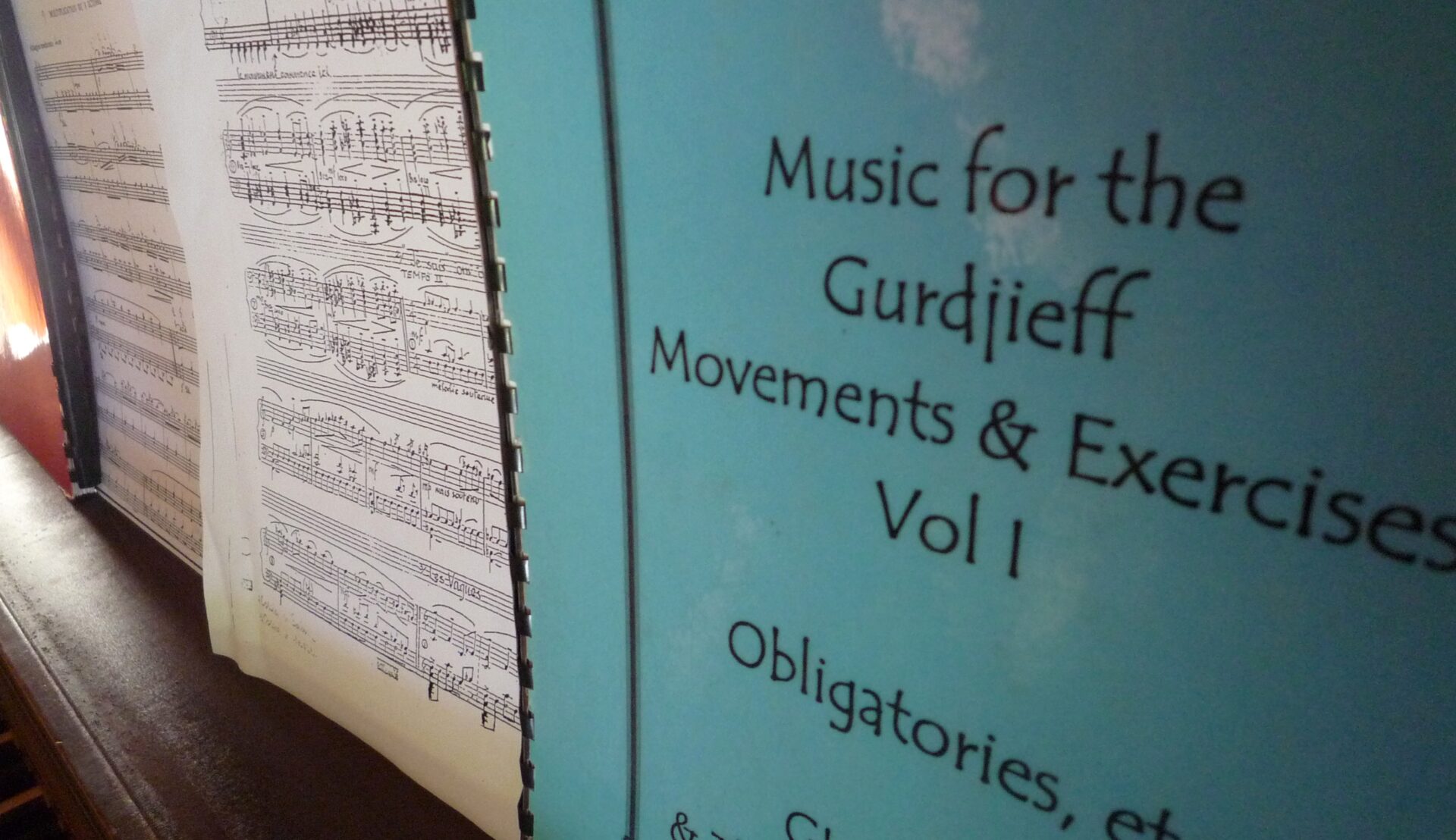 A big part of shared listening at Camp Caravan takes place during our practice of the Gurdjieff Movements. The music guides us in the multiple rhythms and feeling of the exercises and sacred dances, while unifying the group.
Through its beauty, vibration, and mathematical precision, the music can evoke a profound spiritual experience. It anchors this precision while simultaneously bringing body, mind, and feeling into alignment.
Gurdjieff recounted that monasteries, Dervish brotherhoods, and folk traditions of the Caucasus, Central Asia, and the Middle East were the sources of the melodies of this music. Through collaboration with Thomas de Hartmann, this music preserves ancient sacred material while serving as a vehicle for transmission.
A remarkable collaboration
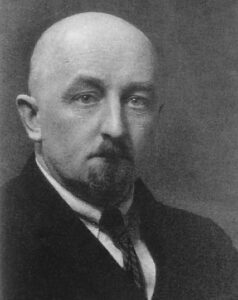
Gurdjieff and Thomas de Hartmann collaborated to compose what is known as the Gurdjieff music including the piano music for Movements.
From a young age, de Hartmann was convinced that music must be more than entertainment—that it was a language that could reach beyond the purely rational mind. He worked with avant-garde artists of the Der Blaue Reiter (The Blue Rider) group in Munich, with his most profound influence G.I. Gurdjieff, whom he first met before the Russian Revolution.
Gurdjieff was not a trained composer. He collaborated on the music with de Hartmann who lent his expertise to give expression to Gurdjieff’s melodies, rhythms, and dynamics. First, they worked together on the Movements music and later on hundreds of other compositions, through 1927.
De Hartmann describes the process of composing for the Movements
“The catching and noting down in general of all the music of Georgi Ivanovitch usually happened in the evening, either in the big salon of the Prieuré house or in the Study House. From my room I usually heard when G. I. began to play. Bringing my music paper, I had to rush downstairs. All the people came soon, and the music dictation was always in front of everybody.
It was not easy to note down. Having listened to him playing a melody at a feverish pace, I had to scribble at once on paper the twisting musical inversions, sometimes a repetition of just two notes. But in what rhythm? How to make the accentuation? The flow of melody could not at times be stopped or divided by bar lines. And the harmony on which the melody was built was an Eastern harmony, which I only gradually recognized.
Often—to torment me, I think—he would begin to repeat the melody before I had finished my notation, and these repetitions were very often new variations with subtle differences which drove me to despair. Of course, this process was never just a matter of simple dictation, but always a personal exercise for me to ‘catch and grasp’ the essential character, the very kernel of the melody.
After the melody was given, Georgi Ivanovitch would tap on the lid of the piano a rhythm on which to build the bass accompaniment. Then I had to perform at once what had been given, improvising the harmony as I went.
Very soon after I began this work with Georgi Ivanovitch, I came to understand that no free harmonization of the music was possible. The genuine true character of the music is so typical, so in itself, that any invented embellishments would only destroy the absolutely individual essence of every melody.”— Thomas de Hartmann, Our Life with Mr. Gurdjieff
Gurdjieff music collections
Sacred hymns and liturgical pieces
- Examples: Hymn to the Sun, Hymn from a Great Temple, Prayer and Despair
Dervish dances and rhythmic exercises
- Examples: Sayyid Dance, Dervish Dance, Dance Rhythm
Folk melodies, many from eastern traditions
- Examples: Kurd Shepherd Melody, Song of the Aïsors, Armenian Song, Assyrian Women Mourners
Travelers’ songs and processional music
- Examples: Hymn for Christmas Tide, Procession of the Magi, Caucasian Dance
Meditative and contemplative pieces
- Examples: Asian Song, Meditation, The Struggle of the Magicians (finale themes)
The Thomas de Hartmann Project
Thomas de Hartmann’s (TdH) career as a notable twentieth century composer did not take off during his own lifetime. With his commitment to G.I. Gurdjieff, and the wars in Europe, his classical compositions fell into obscurity.
Robert Fripp and Elan Sicroff had meetings at Camp Caravan in 2006 to discuss the composer, marking the beginning of The Thomas de Hartmann Project. The Project’s mission is to bring the classical music of TdH to the listening public. The Project team includes Camp Caravan group members, which supported the Project, especially in its initial phase.
View the complete story and updates at the Project’s website.
De Hartmann performances and recordings
The Thomas de Hartmann Project undertook a five-year recording project in Holland of the composer’s chamber music, produced by Gert-Jan Blom. Pianist and Sherborne graduate Elan Sicroff was the principal musician and musical advisor.
In 2021, a few months before the outbreak of the war in Ukraine, the Lviv Orchestra of Ukraine, conducted by Ted Kuchar, performed and recorded a selection of dH’s orchestral pieces. Efrem Marder, a student of Fourth Way teachers Paul and Naomi Anderson, and Stefan Maier, Camp Caravan member, served as project managers, fundraisers and producers.
De Hartmann recordings in progress, as of 2025, include the Gurdjieff/De Hartmann Movements Music, with Elan Sicroff pianist and Gert-Jan Blom producer. De Hartmann’s opera, “Esther,” the composer’s longest work, features the Bournemouth Symphony with the Ukrainian conductor, Kirill Karabits, produced by Efrem Marder. When completed, the recordings will be available for purchase.
De Hartmann sheet music
The TdHP has also begun to publish the Sheet music thanks to the tireless effort of Tom Daly, Jr. Joshua Bell will perform De Hartmann’s violin concerto in London, New York, Boston, Toronto and Oslo in the fall of 2025. He describes the music:
“As I started exploring the concerto, I was immediately struck by the depth of emotion it conveys, and I was astonished that such a powerful work could have escaped me and most classical music listeners until now. This violin concerto is both heart-wrenching and uplifting, and is as gripping and relevant today as it was when it was composed in 1943.”
Support a special recording of the Movements Music
To support the Sicroff/Blom recording of the complete Gurdjieff/De Hartmann Movements Music, link here.
To support the overall efforts of the Thomas de Hartmann Project link here.
